
The Science of Speech Sound Selection: How SpeechLP Algorithmically Creates Age-Based and Difficulty-Based Word Filters
Speech-language pathologists rely on developmental norms to guide clinical decision-making. Here is how SpeechLP translates peer-reviewed U.S. consonant acquisition research into automated, defensible word filters for therapy targets.
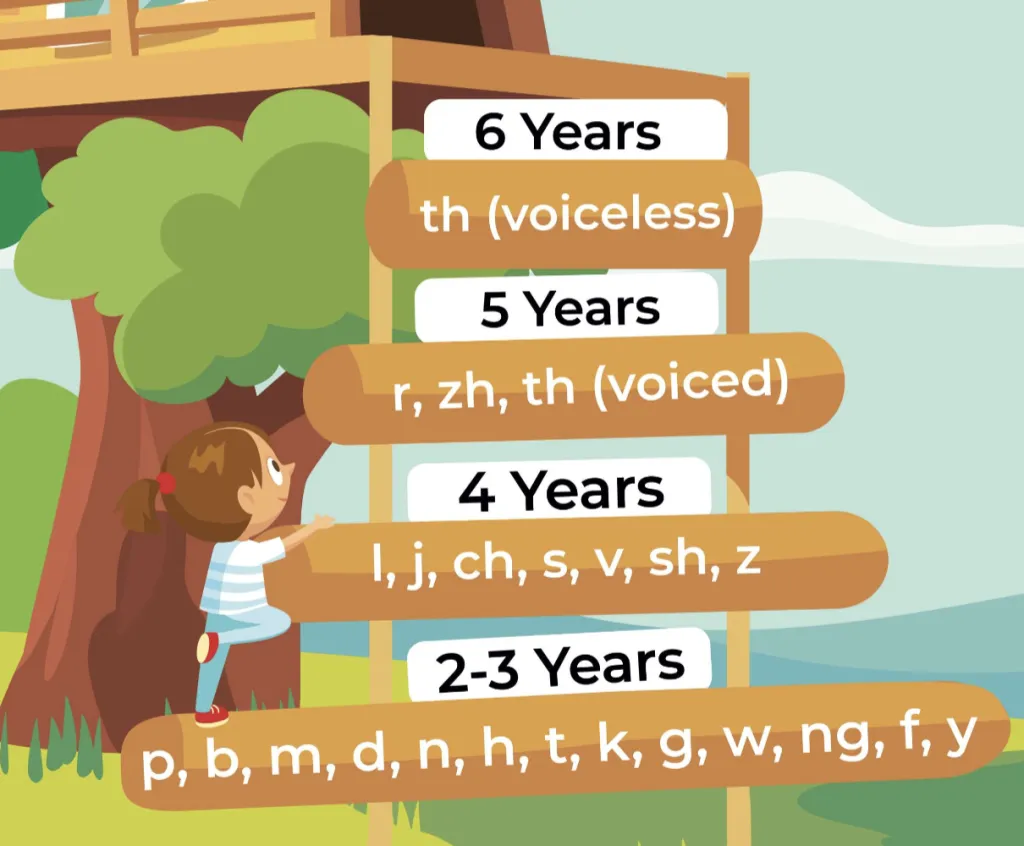
Speech-language pathologists (SLPs) rely on developmental norms to guide clinical decision-making, whether selecting therapy targets, screening speech sound development, or determining eligibility for services. At SpeechLP, our goal was to translate those same evidence-based norms into a system that works automatically, consistently, and transparently, while reflecting the nuanced way clinicians think in practice.
This article explains how SpeechLP algorithmically generates word filters using peer-reviewed research on English consonant acquisition in the United States, informed by Children’s English Consonant Acquisition in the United States: A Review, 2020, by Kathryn Crowe and Sharynne McLeod, and refined through direct collaboration with practicing SLPs.
Research Foundation: English Consonant Acquisition in the U.S.
Crowe and McLeod’s review synthesized data from multiple sources, including peer-reviewed journal articles and standardized assessments of typically developing children in the U.S. Their synthesis established that consonant development follows a predictable progression.
SpeechLP uses these developmental patterns as the evidence base for all age-related filtering.
Translating Research Into Age-Based Word Filters
Rather than assigning age levels arbitrarily, SpeechLP applies a strict rule: The presence of the latest-developing consonant in a word determines its minimum developmental age.
| Developmental Age | Consonants |
| 2 years | /b, n, m, p, h, w, d/ |
| 3 years | /g, k, f, t, ŋ, j/ |
| 4 years | /v, dʒ, tʃ, s, z, l, ʃ/ |
| 5 years | /ɹ, ð, ʒ/ |
| 6 years | /θ/ |
Note: If a word contains multiple consonants from different groups, the highest age group applies. If a word is multisyllabic, +1 year is added to the base age (maxing at 6+).
Granular Filtering: Beyond Age and Phonemes
SpeechLP offers a multi-dimensional filtering system that allows clinicians to isolate specific linguistic properties beyond just the target sound.
1. Phonological Structure & Complexity
Clinicians can filter based on the "shape" of the word to target specific motor planning levels:
- Syllable Count: Filter by 1, 2, 3, or 4+ syllables to control for length and prosodic complexity.
- Sound Structure: Isolate words by their CV (Consonant-Vowel) patterns, such as CVCV (e.g., "mama"), CVC (e.g., "cat"), or more complex structures involving clusters.
2. Word Type & Functional Lexicons
To ensure therapy remains functional and engaging, SpeechLP categorizes words into meaningful groups:
- Seasonal & Holiday Tracking: Automatically identifies high-interest vocabulary for Christmas and Halloween to keep therapy sessions relevant and engaging.
- Academic Foundations: Simplifies data tracking for early-intervention milestones including Colors, Numbers, and Early Learning concepts.
- Functional Communication: Maps daily vocabulary into Everyday Life nouns and High Frequency "power words" like verbs and prepositions to monitor progress in building sentences.
3. Position and Blends
Precision targeting is essential for traditional articulation therapy. SpeechLP allows filtering by:
- Position: Initial, Medial, or Final target sounds.
- Initial & Final Blends: Specifically target consonant clusters (e.g., /st-/, /bl-/, /-ts/, /-nd/) to address cluster reduction or complex phonotactics.
Advanced Phonological Process Filtering
For children with phonological disorders, SpeechLP provides an algorithmic "Process Filter." This allows clinicians to select words that specifically target or avoid certain error patterns.
Our system analyzes words to identify targets suitable for the following processes:
- Substitution Processes: Stopping, Fronting, Gliding, Depalatalization, Affrication, Deaffrication, Vocalization, Denasalization, Labialization, and Alveolarization.
- Syllable Structure Processes: Cluster Reduction, Final Consonant Deletion (FCD), Weak Syllable Deletion (WSD), and Initial Consonant Deletion (ICD).
- Assimilatory Processes: Labial, Nasal, or Velar Assimilation, Prevocalic Voicing, Postvocalic Devoicing, Coalescence, and Glottal Replacement.
Age-Relative Difficulty Ratings: Easy, Medium, Hard
While age filtering determines if a word is developmentally appropriate, Difficulty is a relative measure of articulatory load. SpeechLP worked with Alyssa Fox, SLP-CCC and Mari Gottlieb, SLP-CCC to define these levels.
Core Principle: Difficulty is relative to the child’s developmental age, not an inherent property of the word.
How Difficulty is Assigned
SpeechLP evaluates each word against four dimensions: Late-Developing Sound Load (/ɹ, θ, ð, ʃ, ʒ, tʃ, dʒ/), Mid-Level Sound Presence (/l, s, z, v, k, g/), Syllable Count, and Complexity Flags (clusters/morphological load).
| Rating | Criteria Examples |
| Easy | Well within developmental expectations; single syllable; no mid/late sounds for that age. |
| Medium | Contains one late sound (for older children); contains mid-level sounds (for younger children); 2+ syllables. |
| Hard | Contains two or more late-developing sounds; child is 5 or younger and word contains any late sound. |
Why This Matters for SLPs
By combining peer-reviewed research with automated IPA analysis, SpeechLP reduces the "cognitive load" of session prep. Instead of flipping through folders of word lists, clinicians can generate a list of "3-syllable, Initial /s/ blend, Easy-difficulty words for a 4-year-old" in seconds.
This ensures therapy is:
- Scaffolded: Move from Easy to Hard within the same phoneme.
- Defensible: Every word is backed by U.S. consonant acquisition data.
- Personalized: Targets are matched to the specific phonological processes the child is exhibiting.
The Intersection of Evidence and Implementation
SpeechLP uses Crowe and McLeod’s developmental norms as one input to a dynamic word-filtering framework. The system organizes information about phonemic complexity, syllable shape, and articulatory load to support target selection. These suggestions do not replace assessment or clinical judgment; an SLP should review their appropriateness for each child.
Beyond simple phoneme matching, the ability to filter by phonological processes and age-relative difficulty allows for the high-precision scaffolding necessary for neuroplastic change. When administrative tasks—such as manual target selection and phonetic transcription—are streamlined through validated algorithms, the SLP is free to focus on the qualitative nuances of the therapeutic interaction. This technical precision ensures that therapy remains challenging enough to drive progress, yet accessible enough to maintain the child’s motivation and self-efficacy.
Ultimately, the goal of these filtering options is to uphold a high standard of care in a digital environment. By grounding software logic in peer-reviewed U.S. consonant acquisition research and direct clinical collaboration, SpeechLP provides a transparent and reliable bridge between clinical theory and daily practice. This ensures that the focus remains where it belongs: on achieving functional communication outcomes for the children and families we serve.
Keep Practicing with SpeechLP
Keep momentum between sessions with guided articulation and language practice in the app.