Sound-Level Articulation Practice: Designed for Ages 2+
SpeechLP is designed for children ages 2 to 9. Learn what sound-level articulation means and how to make early practice playful, supported, and appropriate for your child.
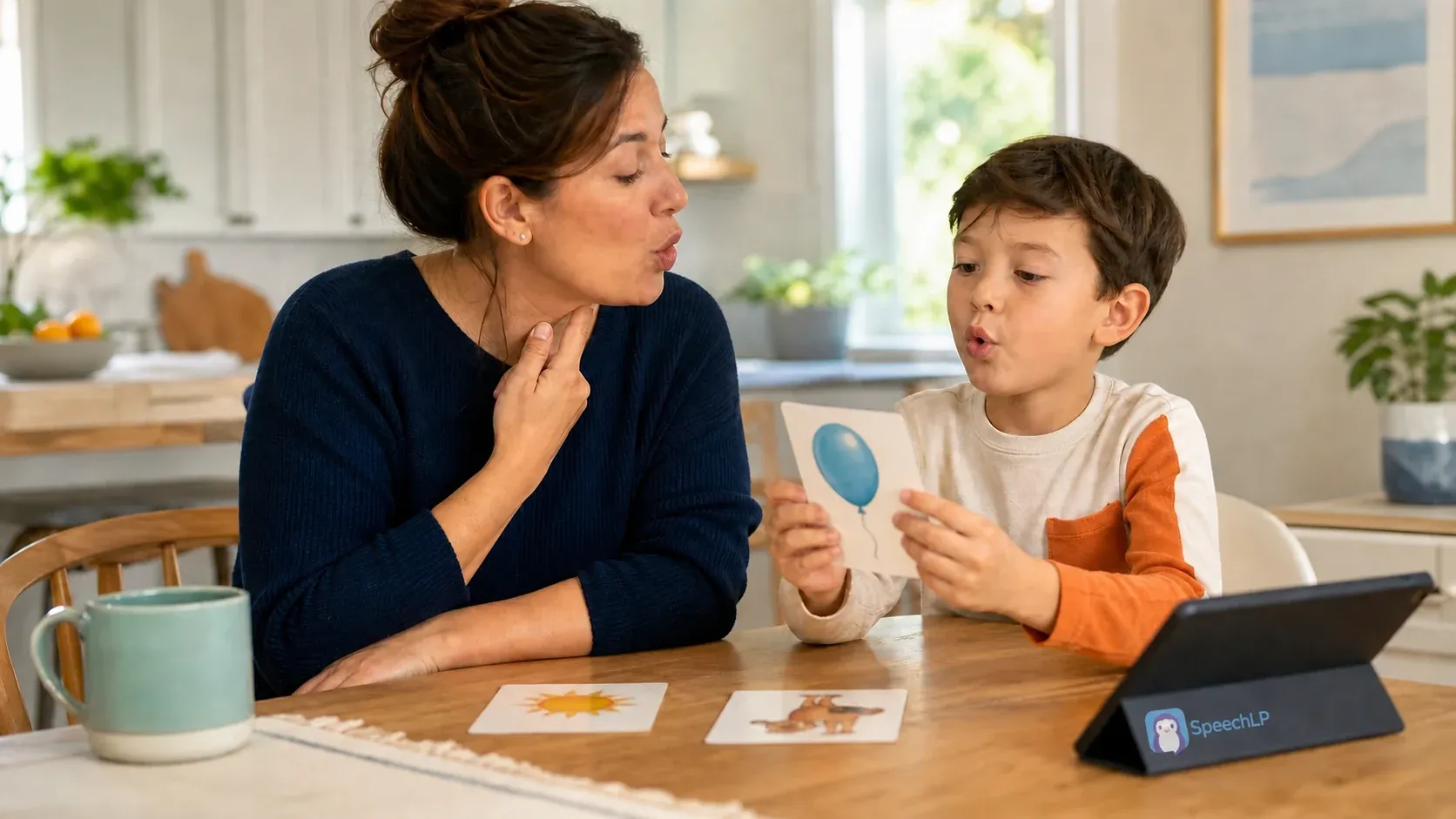
SpeechLP is designed for children ages 2 to 9, including early learners beginning to explore speech sounds with a parent or caregiver. Starting at 2+ means making room for supported, playful practice. The activity should fit what a child can do today.
Sound-level articulation focuses attention on an individual speech sound: how it sounds and how the mouth makes it. That sound can then become part of a syllable, a familiar word, and eventually everyday speech. A child's speech-language pathologist (SLP) can help decide where to begin.
What sound-level articulation means
Articulation is how we shape and pronounce speech sounds. Saying a sound on its own is called producing it in isolation. For example, a child might copy a gentle “mmm” before trying the sound in “me” or “more.” Hearing and trying a sound is different from learning the name of a letter.
Some children can make a sound by itself but find it harder inside a word. Others find a familiar word easier than an isolated sound. An SLP can choose a useful starting point and help connect the practice to words the child wants to say.
What starting at age 2+ means
Young children are still learning to communicate. Speech sound errors can be part of typical development, and different sounds emerge at different times. SickKids explains that articulation difficulties are common in young children and that assessment decisions depend on factors including age, hearing, and frustration with communication.
For a 2-year-old, a suitable activity might be watching a caregiver's face, listening to a model, and choosing whether to copy a sound during play. Another child may be ready to practice familiar words. Neither activity needs to feel like a test.
SpeechLP's intended age range begins at 2. Suitability still depends on the child's attention, ability to take part, communication needs, and the activity selected. A young child should use it together with an adult who can model words, respond to attempts, and stop when the child has had enough.
Try sounds during shared play
Start with a sound or word your SLP has recommended, or simply model familiar words naturally during play. You can make the sound yourself and leave space for your child to respond. An invitation is enough; every turn does not need an answer.
- Share a model. Say “mmm” while pretending to enjoy a toy snack, then use a familiar word such as “more.” These are examples of sound play, not targets every child needs to master.
- Follow your child's interest. Use a favorite toy, picture book, or everyday routine so the sound has a reason to be there.
- Take turns. Let your child watch, point, gesture, or try a sound. Respond to the message as well as the pronunciation.
- Keep it brief. Finish while the child is still comfortable. If they turn away or become frustrated, return to ordinary play.
Avoid correcting every word or repeatedly asking for a better attempt. ASHA recommends giving children good speech models and recognizes that some sound errors are expected while speech develops.
How SpeechLP fits into early articulation practice
SpeechLP brings attention to target speech sounds through articulation games. Children practice words containing selected sounds, while caregivers can review practice reports. Sound-focused word practice and saying a sound in isolation are different activities; choose the level your child is ready for.
For ages 2+, an adult can sit alongside the child, model the target word, and help connect it to real life. After a game, you might use a familiar practice word while reading or playing together. There is no need to turn the rest of the day into pronunciation practice.
Automatic feedback is practice information. A game score does not establish whether a toddler's speech is typical or whether they need treatment. For children already seeing an SLP, ask which sounds and words to practice between sessions. Our guide to parent-supported home practice explains how to keep that feedback loop useful.
When to ask for help
Talk with an SLP or your child's healthcare professional if you are concerned about speech, language, hearing, or difficulty communicating. You do not need to wait for a third birthday to raise a concern. An assessment can help distinguish speech sound needs from broader language or hearing needs and identify appropriate support.
SpeechLP supports practice and education. It does not diagnose a speech disorder or replace an individualized evaluation or treatment plan. Starting at 2+ is an invitation to supported practice matched to the child, with room for play, conversation, and professional guidance.
Sources
- SickKids. Speech and language: How to help with articulation. Background on speech sounds, development, and assessment.
- American Speech-Language-Hearing Association. Early Identification of Speech, Language, Swallowing, and Hearing Disorders. Guidance on early concerns and everyday speech models.
Keep Practicing with SpeechLP
Keep momentum between sessions with guided articulation and language practice in the app.